
May 2018 Charity & NFP Law Update
On April 26, 2018, the Charity Commission for England and Wales (“Charity Commission”) published its research report, Focus on Insider Fraud (“Report”), outlining findings from its 2018 study on how insider fraud affects charities. Insider fraud is committed when individuals within the charity, such as trustees (a term commonly used to describe directors in the United Kingdom), employees or volunteers, commit various forms of fraud from within the organization, including financial fraud, making unauthorized payments, inflating expenses, and stealing information. In this regard, the Report aims to better understand the types of insider fraud occurring in charities, as well as factors that make charities vulnerable to insider fraud, and trends in the charitable sector.
In Phase One of its study, the Charity Commission reviewed 20 sample cases where charities had confirmed insider fraud had occurred at their organizations or where charities were deemed to be at an increased risk to insider fraud. In 19 of the 20 cases that were reviewed, the absence of appropriate controls to prevent fraud was determined to be the primary enabling factor in either allowing the fraud to occur or in making the charity more vulnerable to fraud. While a similar study conducted by the Charity Commission in 2016 indicated that most charities in that study had prevention controls that were inconsistently applied, the Report notes the two studies together suggest that trustees should ensure that fraud prevention controls are in place and also applied consistently within the charity’s operations.
Phase Two of the study involved 54 responses from charities providing requested information concerning insider fraud. In 43% of the cases, the insider fraud was committed by an employee and the stated prime factor for the insider fraud was “excessive trust or responsibility placed on one individual.”
In closing, the Report indicates that it is “vital that charities take appropriate action that is proportionate to their activities, size and financial governance, in order to manage the risk of potential fraud.” The Report also encloses an infographic of “10 top tips for fraud prevention,” together with other recommendations on how charities can avoid insider fraud occurring at their organization. The Charity Commission’s ten top tips are outlined below:
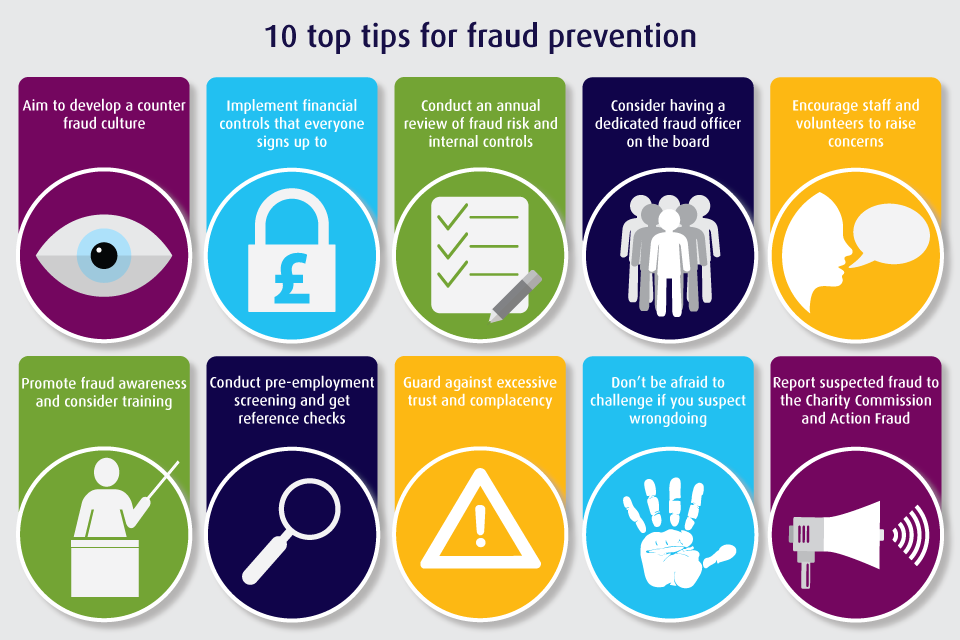
- Aim to develop a counter fraud culture;
- Implement financial controls that everyone signs up to;
- Conduct an annual review of fraud risk and internal controls;
- Consider having a dedicated fraud officer on the board;
- Encourage staff and volunteers to raise concerns;
- Promote fraud awareness and consider training;
- Conduct pre-employment screening and gets reference checks;
- Guard against excessive trust and complacency;
- Don’t be afraid to challenge if you suspect wrongdoing; and
- Report suspected fraud to the Charity Commission and Action Fraud.
Charities and not-for-profits in Canada will find the findings and recommendations of the Charity Commission Report to be a useful resource to help avoid insider fraud occurring within their organizations.