by Dev User | Jun 30, 2016 | Charity & Not-for-Profit Law, Counter Terrorism Law, Expertise
Charity & NFP Law Bulletin No. 388, June 29, 2016
On June 3, 2016, the Supreme Court of Canada (“SCC”) rendered its judgments in the companion appeals Canada (Attorney General) v Chambre des notaires du Québec (“Chambre des notaires”) and Canada (National Revenue) v Thompson (“Thompson”). The appeal in Chambre des notaires was heard on October 3, 2015 and the appeal in Thompson was heard on December 4, 2014. Both appeals focused on the Income Tax Act’s (“ITA”) “requirement scheme” and the ITA’s definition of “solicitor-client privilege.” Together these judgments will likely have an impact on how all taxpayers, including registered charities, other qualified donees, and non-profit organizations (“NPOs”), deal with Canada Revenue Agency’s (“CRA”) officials during audits and throughout the more formal tax dispute process.
For the balance of this Bulletin, please see Charity & NFP Law Bulletin No. 388.
by Dev User | Jun 29, 2016 | Charity & Not-for-Profit Law, Expertise
On June 9, 2016, Bill 149, Rowan’s Law Advisory Committee Act (“Rowan’s Law”) received royal assent in the Ontario legislature. As discussed in our January 2016 Charity & NFP Law Update, Rowan’s Law was named after 17-year-old Rowan Stringer, who tragically died after sustaining a concussion while playing rugby. This is the first concussion protocol legislation that has been passed for young athletes in Canada. This new law will be of interest to any charities and not-for-profits that run activities for young athletes, such as: sporting events; helping to operate leagues or sporting organizations; or, assist in establishing standards and rules for the carrying out of the sporting activity.
The focus of Rowan’s Law is to provide education regarding sports-related concussions to athletes, parents and coaches. The legislation would establish a mandatory protocol that dictates when an athlete must be removed from the applicable sport if a concussion is suspected. Further, it also mandates that medical clearance must be obtained before athletes are permitted to return to his or her chosen sport after sustaining a concussion. An advisory committee will also be established to provide recommendations to the legislature based on findings from the inquest into Rowan Stringer’s death. The committee will be composed of members appointed by the Minister of Children and Youth Services, the Minister of Education and the Minister of Health and Long Term Care, and the Minister of Tourism, Culture and Sport.
As mentioned above, it is the first legislation of its kind in Canada and follows Bill 39, Education Amendment Act (Concussions), 2012, which was introduced in 2012 and would have established similar rules for teachers and coaches, but died on the Order Paper in October 2012 when the Legislature was prorogued. Charities and not-for-profits that provide services for children should remain attentive to the Rowan’s Law and the recommendations that its advisory committee will make because they may need to adopt new policies to ensure compliance.
by Dev User | Jun 29, 2016 | Counter Terrorism Law, Expertise
Bill C-22 To Establish the National Security and Intelligence Committee Passes First Reading
On June 16, 2016, Bill C-22, An Act to establish the National Security and Intelligence Committee of Parliamentarians and to make consequential amendments to certain Acts (“Bill C-22”) passed its First Reading in Parliament. If passed, Bill C-22 would establish the National Security and Intelligence Committee of Parliamentarians (the “Committee”) and determine its composition and mandate. It would also establish the Committee’s Secretariat, which would assist the Committee in fulfilling its mandate and make consequential amendments to certain Acts.
The Committee would be given the capacity to monitor classified security and intelligence activities and subsequently report findings to the Prime Minister. Bill C-22 states that the mandate of the Committee would be to review:
- the legislative, regulatory, policy, administrative and financial framework for national security and intelligence;
- any activity carried out by a department that relates to national security or intelligence, unless the appropriate Minister determines that the review would be injurious to national security; and
- any matter relating to national security or intelligence that a minister of the Crown refers to the Committee.
Although the Committee would be precluded from reviewing activities if such a review would be deemed “injurious to national security”, charities and not-for-profits that have concerns about the far-reaching effects of Bill C-51 and the dearth of oversight for broad state investigative powers may wish to follow the progress of Bill C-22.
Revisions Announced to FATF Recommendation 8
From June 22-24, 2016, the Financial Action Task Force (FATF) held a plenary meeting in Busan, Korea, which, among other things, resulted in revision of FATF Recommendation 8 and its interpretive note to protect non-profit organisations from terrorist financing abuse (the “Revision”) which has been incorporated into the FATF’s main Recommendation document. The FATF is an inter-governmental body responsible for setting and monitoring international standards for combating money laundering and the financing of terrorism and Recommendation 8 deals specifically with combating the abuse of non-profit organizations, internationally.
Of particular note is the fact that the Revision has amended the Recommendation to remove the identification of the Non-Profit Organization (“NPO”) sector as “particularly vulnerable” to terrorist abuse and money laundering concerns. The Revision follows a Consultation and Dialogue Meeting that the FATF held with NPOs on April 18, 2016, in Vienna to encourage “open dialogue with representatives from a variety of NPOs on the FATF’s ongoing work to revise its standards on non-profit organizations” (as discussed in our April 2016 Charity & NFP Law Update). This meeting followed a November 2015 call for public consultation on the Interpretive Note to Recommendation 8 (the “Interpretive Note”) that sought to garner input to refine its terminology and application to the NPO sector.
With regard to the role of NPOs in terrorist financing, the FATF previously released “The FATF Typologies Report on Risk of Terrorist Abuse in Non-Profit Organizations” (the “Typologies Report”) in June 2014, which identifies factors that contribute to abuse of NPOs (as discussed in our July/August 2014 Charity & NFP Law Update). The Typologies Report was a precursor for the preparation of a recently revised best practices paper published by the FATF in June 2015, “Best Practices Paper on Combatting the Abuse of Non-Profit Organizations (Recommendation 8)” (the “Best Practices Paper”) that discusses strategies for implementing the recommendation (as discussed in our July/August 2015 Charity & NFP Law Update).
A more extensive analysis of the changes to the more complex Interpretive Note to Recommendation 8 will follow in a future Update.
by Dev User | Jun 15, 2016 | Charity & Not-for-Profit Law, Employment Law, Expertise
Seminar Materials available.On Demand / Replay available.
Carters held its Spring 2016 Webinar Series to assist charities and not-for-profits with current and essential legal issues. These complimentary one-hour webinars provided a detailed and practical explanation of the following topics.
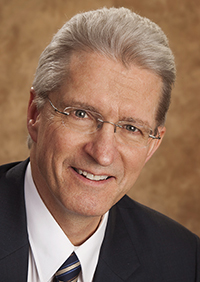 |
Thursday, April 21st – 1:00 – 2:00 pm ET
Going into Business? The Social Enterprise Spectrum for Charities
Terrance S. Carter, B.A., LL.B., TEP, Trade-mark Agent
Author, speaker and counsel on legal issues involving charities and not-for-profits and editor of www.charitylaw.ca. Carters, Orangeville, Ontario.
Seminar Materials and On Demand / Replay available. |
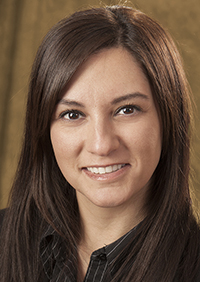 |
Wednesday, May 4th – 1:00 – 2:00 pm ET
Going Social: Using Social Media to Accomplish Your Mission
Sepal Bonni, B.Sc., M.Sc., J.D., Trade-mark Agent
Counsel on legal issues involving charities and not-for profit organizations in the areas of intellectual property and privacy law. Carters, Ottawa, Ontario.
Seminar Materials available On Demand / Replay available. |
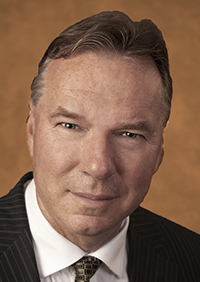 |
Wednesday, May 18th – 1:00 – 2:00 pm ET
Human Rights Challenges in the Workplace
Barry W. Kwasniewski, B.B.A., LL.B. – Counsel on legal issues involving charities and not-for-profit organizations with expertise in employment, human rights and insurance law. Carters, Ottawa, Ontario.
Seminar Materials and On Demand / Replay available. |
![]() |
Wednesday, June 8th – 1:00 – 2:00 pm ET
The ABC’s of GST/HST for Charities & NPOs
Linsey E.C. Rains, B.A., J.D. – Speaker and counsel on legal issues involving charities and not-for-profit organizations. Formerly with Canada Revenue Agency. Carters, Ottawa, Ontario.
Seminar Materials available soon and On Demand / Replay available. |
