|
1
|
- By Kenneth R. Goodman,
- Deputy Public Guardian and Trustee -
- Director of Legal Services
- Office of the Public Guardian and Trustee
- 595 Bay Street, Suite 800
- Toronto, ON M5G 2M6
|
|
2
|
|
|
3
|
|
|
4
|
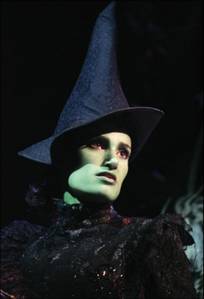
- BUT WAS SHE ALWAYS WICKED?
|
|
5
|
- Trust Law
- Guidelines of how you carry out your duty
- Established over time by English and Canadian common law
- Tax Law
- Prescribed courses of actions and requirements with detailed and, at
times, complicated rules
|
|
6
|
- PGT
- Monitors compliance with laws re proper use of charitable assets and
ensures trustees carry out fiduciary duties
- No annual filing but initial report and when information changes
- No power to revoke charitable status can apply to court if property
misused
- Court can make order requiring fiduciaries (Directors) to repay any
misused property.
- CRA
- Focus on tax law and tax principles to prevent abuses of the charitable
donation tax credit system including disbursement quota and receipt
system
- Requires filing of annual return (T3010)
- Can revoke registration or administrative penalties e.g. fines or loss
of receipting privileges.
|
|
7
|
|
|
8
|
|
|
9
|
|
|
10
|
- “Trustee” – a person who is holding the title to the trust property for
the benefit of the beneficiaries
- This could be an individual, a bank, a trust company, etc.
- “Trust Property” – any kind of right or asset can be held in trust
|
|
11
|
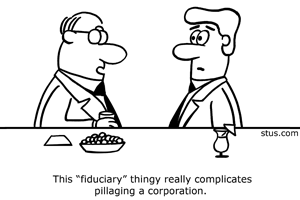
- “Fiduciary Duty” – a legal duty of loyalty and faithfulness towards
another person
- Comes from the Latin word “fiducia”, which means “trust”
- “Relationships in which a fiduciary obligation have been imposed seem to
possess three general characteristics:
- (1) The fiduciary has scope for the exercise of some discretion
or power.
- (2) The fiduciary can unilaterally exercise that power or
discretion so as to affect the beneficiary's legal or practical
interests.
- (3) The beneficiary is peculiarly vulnerable to or at the mercy
of the fiduciary holding the discretion or power.”
- -- Supreme Court of Canada in Frame v. Smith, [1997] 2 S.C.R. 99 at 136
|
|
12
|
- Duty owed by trustees to the beneficiary
- Others in a position of authority or power also owe this duty to those
who are subject to their authority or power
- “Some recognized examples of these categories are relationships between directors
and corporations, solicitors and clients, trustees and beneficiaries,
agents and principals, life tenants and remaindermen, and partners. As
well, it has frequently been noted that the categories of fiduciary
relationship are never closed ... An extension of fiduciary obligations
to new "categories" of relationship presupposes the existence
of an underlying principle which governs the imposition of the fiduciary
obligation.”
|
|
13
|
|
|
14
|
- All Corporations:
- Canadian Aero Service Ltd. v. O’Malley [1973] S.C.R. 592
- Supreme Court of Canada found that the role of the fiduciary applies to
directors and senior management officials of corporations
- Charitable Corporations:
- Courts originally held the following:
- 1) The charitable corporation holds its property in trust for the
charitable purposes; and
- 2) Directors of charitable corporations are trustees.
|
|
15
|
- Overtime these concepts have been refined:
- The charitable corporation does not hold all their property in trust for
charitable purposes.
- Directors are not trustees, but are high order fiduciaries with
similarities to trustees.
- Charitable corporations are hybrid entities in law, subject to both
corporate and charities law.
|
|
16
|
|
|
17
|
- A fiduciary cannot personally benefit from his or her duties to the
beneficiary
- To be advised that one is in a conflict of interest is not necessarily
an accusation that a fiduciary has done something wrong. A conflict of interest can exist even
if no unethical or improper act results.
- A conflict of interest can create an appearance of impropriety that can
undermine confidence in the fiduciary’s ability to act in accordance
with his or her duty of loyalty and honesty owed to the beneficiary.
- “A conflict of interest may arise, whether or not:
- (a) financial advantage has been or may have been received;
- (b) the judgment of the person has actually been affected or impaired by
the conflict;
- (c) the conflict is actual or perceived;
- (d) there is an intention to obtain a personal benefit, either directly
or indirectly;
- (e) there is any willful wrongdoing.”
- -- Peel (Regional Municipality) v. Greater Toronto Airports Authority,
[1999] O.J. No. 3597 (Ont. Sup. Ct. J.)(QL).
|
|
18
|
- “It is an inflexible rule of a
Court of Equity that a person in a fiduciary position, such as the
respondent’s, is not, unless otherwise expressly provided entitled to
make a profit; he is not allowed to put himself in a position where his
interest and duty conflict.”
- - Lord Herschell, Bray v. Ford
[1896] A.C. 44
|
|
19
|
- Leading Cases:
- Re French Protestant Hospital [1951] 1 All ER 935:
- “Lord Herschell clearly recognized that in some cases it may not be
improper to have a provision, sometimes described as a charging clause, which
enables trustees to be paid, and one is to be paid for their services,
but, while it is entirely proper for a settlor or testator to insert in
his settlement or will a provision enabling the trustees of a trust
constituted by him to obtain payment for their services, it seems to me
a very different matter for persons who are already in the position of
trustees, and therefore, so far as they exercise their powers at all,
bound to exercise them in a fiduciary manner on behalf of the charitable
trusts in which they act, to empower themselves to be at the one time
trustees and persons who are making a profit.”
- Smallpiece v. Attorney General [1990], from the Great Britain, Charity
- Commission, Report of the Charity Commissioners for England and
- Wales for the year of 1990, (London: HMSO)
- - Commission found it was not
appropriate to set up a subsidiary trading company in order to pay
directors for services provided to the trading company.
|
|
20
|
- Charities Act, 2006
- Discussions over changes to the Act:
- Charity Commission Seminar:
- “Trustee Remuneration: Views from the Sector”
- 1) Delegates distrusted the idea of paying trustees, and asked to look
at “whether it is in the best interests of the charity, regardless of a
charity’s financial and lawful ability to pay trustees.”
- 2) Delegates felt that if there was to be any decision to pay trustees
it should be “open and transparent at all stages and that proper
management of conflict of interest is essential.”
|
|
21
|
- Leading Case:
- Public Trustee v. Toronto Humane Society et. al [1987] O.J. No. 534
- Status of Directors:
- “Without going the length of holding that the Society is in all respects
and for all purposes a trustee, I have concluded that it is answerable
in certain respects for its activities and the disposition of its
property as though it were a trustee.”
- Quoting from Re French Protestant Hospital:
- “Addressing the status of the directors, Danckwerts J. says at p.570
‘….it seems to me plain that they are, to all intents and purposes,
bound by the rules which affect trustees.’ I am in respectful agreement
with that conclusion and deem it applicable to the remuneration of the
Society.”
- Court’s Jurisdiction:
- “There is broad inherent jurisdiction in the court in charitable matters
exercisable by virtue of its special position in the law of charities.”
- “…I am satisfied that it is amenable to the ancient supervisory
equitable jurisdiction of the court”
|
|
22
|
- Other cases that have followed Toronto Humane Society in Ontario:
- Re David Feldman Charitable Foundation [1987] O.J. No. 1432
- Re Faith Haven Bible Training Centre [1988] O.J. No. 969
- Harold G. Fox Education Fund [1989] O.J. No. 1085
|
|
23
|
- Toronto Humane Society followed outside of Ontario:
- Yukon Youth Centre Society v. Leonard [1994] Y.J. No. 90
- Justice Hudson quoting from Toronto Humane Society:
- “As regards the directors, they were at the very least, fiduciaries,
and owed a fiduciary obligation to the society. When two of them
received a substantial salary from the society, their interest and duty
conflicted.”
|
|
24
|
|
|
25
|
- Prudent Investor Standard
- S. 27(1) In investing trust property, a trustee must exercise the care,
skill, diligence and judgment that a prudent investor would exercise in
making investments. 1998, c. 18, Sched. B, s. 16 (1).
- Authorized investments
- S. 27 (2) A trustee may invest trust property in any form of
property in which a prudent investor might invest
- Diversification
- S. 27 (6) A trustee must diversify the investment of trust
property to an extent that is appropriate to,
- (a) the requirements of the trust; and
- (b) general economic and investment market conditions
- Terms of trust
- S. 27 (9) This section and section 27.1 do not authorize or
require a trustee to act in a manner that is inconsistent with the terms
of the trust
- Trustee’s duty if delegating functions to an agent
- S. 27.1 (4) A trustee is required to exercise prudence in
selecting an agent, in establishing the terms of the agent’s authority
and in monitoring the agent’s performance to ensure compliance with
those terms.
- Investment Plan or Strategy Recommended
- 28. A trustee is not liable for a loss to the trust arising
from the investment of trust property if the conduct of the trustee that
led to the loss conformed to a plan or strategy for the investment of
the trust property, comprising reasonable assessments of risk and
return, that a prudent investor could adopt under comparable
circumstances.
|
|
26
|
- Criteria
- S. 27 (5) A trustee must consider the following criteria in
planning the investment of trust property, in addition to any others
that are relevant to the circumstances:
- 1. General economic conditions.
- 2. The possible effect of inflation or deflation.
- 3. The expected tax consequences of investment decisions or strategies.
- 4. The role that each investment or course of action plays within the
overall trust portfolio.
- 5. The expected total return from income and the appreciation of
capital.
- 6. Needs for liquidity, regularity of income and preservation or
appreciation of capital.
- 7. An asset’s special relationship or special value, if any, to the
purposes of the trust or to one or more of the beneficiaries.
|
|
27
|
- Charities law in Ontario has its roots in English Law and dates back to
the Statute of Elizabeth in 1601.
- Changes in this area of law do not happen very quickly. There have been
a number of improvements. Up to now these have been small but important
improvements.
|
|
28
|
- Some of these changes were included in the Good Government Bill, 2009
which came into effect on December 15, 2009. This very long overarching bill
affects over 26 Ministries. The
OPGT alone had over 20 amendments in this Act.
- The Charities Law Amendments covered three areas:
- 1. Ownership and use of Real
Estate by charities;
- 2. Ownership of for profit
businesses by charities; and
- 3. Ability to capitalize income after a trust has been in existence
for 21 years.
|
|
29
|
- The overall purpose of the reforms is to reduce regulatory burdens on
charities operating in Ontario, while at the same time ensuring
charities use the property they hold for its intended propose, carrying
out the charitable purposes.
I will only speak to two major amendments.
|
|
30
|
- Real Estate
- Former section 8 of the Charities Accounting Act required that any land
owned by a charity must be actually used or occupied for charitable
purposes.
- Current Version:
- Limitation on use of property
- 8. A person who holds an interest in real or personal
property for a charitable purpose shall use the property for the
charitable purpose
|
|
31
|
- If land was held in contravention of the Act, the Public Guardian and
Trustee had the authority to vest the land in her name, with the power
to sell the land and use the proceeds for the charities’ charitable
purposes.
- The new Act states that all property owned by a charity must be used to
benefit the charitable purposes.
With the amendment to section 8 of the Charities Accounting Act,
real property would be treated no differently than personal
property. Any property not needed
for immediate use could be invested in accordance with the Trustee Act. Holding land will no longer be any
different than holding any other investment.
|
|
32
|
- Those who hold an interest in real or personal property will have to
ensure their investments comply with the prudent investor standards set
out in the Trustee Act. It is now
allowed, under the Charities Accounting Act, to hold real estate for any
length of time as long as holding that real estate meets the prudent
investor rules and benefits the charity.
- There were also amendments to Religious Organizations Land Act which
allows unincorporated Religious organizations to lease their land
without any time limit restrictions.
|
|
33
|
- Business Interest
The other major change is the repeal (i.e. cancellation) of the Charitable
Gifts Act.
- There were also changes to the Charities Accounting Act, providing the
PGT and the Court with the necessary tools to look into the operations
of any business in which a charity has a substantial interest.
|
|
34
|
|
|
35
|
- Office of the Public Guardian and Trustee
Charitable Property Program
595 Bay Street, Suite 800
Toronto, ON M5G 2M6
Tel: (416) 326-1963 or in Ontario
toll free at 1-800-366-0335
Internet: www.attorneygeneral.jus.gov.on.ca/english/family/pgt
|

 Notes
Notes